Why people read horoscopes even when they insist astrology is complete nonsense is one of life’s wonderfully amusing contradictions.
They don’t believe a word of it, apparently. Yet there they are, checking what the stars supposedly have in store for them.
Perhaps they read it for a laugh. Perhaps it’s a habit. Or perhaps there’s a tiny part of them wondering whether something might ring true.
Whatever the reason, astrology has an extraordinary ability to attract the attention of people who claim to have absolutely no interest in it.
So, why do people read horoscopes even if they don’t believe in astrology?
Curiosity Doesn’t Require Belief
You don’t have to believe in ghosts to enjoy a ghost story. You don’t have to believe in fortune-telling to wonder what a fortune-teller might say about you.
Horoscopes occupy a similar territory.
A daily prediction offers a brief opportunity to consider what might happen next. Will an unexpected opportunity arise? Is a difficult conversation approaching? Could something you’ve been worrying about finally work out?
Even someone who dismisses astrology might find those questions interesting. And unlike a lengthy psychological assessment or philosophical discussion, a horoscope takes less than a minute to read.
There’s very little commitment involved. You can enjoy the message, disagree with it, laugh at it or forget it entirely.
But occasionally, something sticks.
When a Horoscope Hits Uncomfortably Close to Home
Psychologists have long recognized something called the Barnum effect, also known as the Forer effect.
It describes our tendency to recognize ourselves in personality descriptions that are sufficiently general to apply to many people.
Tell someone they’re independent but occasionally need reassurance, and there’s a reasonable chance they’ll agree. Most of us recognize both characteristics in ourselves.
Skeptics frequently use this phenomenon to explain why horoscopes can appear accurate. It’s a legitimate observation, particularly when predictions are vague enough to accommodate almost any outcome.
But it doesn’t explain everything about why people continue reading them.
A horoscope can also prompt someone to examine a situation they hadn’t previously considered. A prediction about communication might encourage an overdue conversation. A reference to financial caution might remind someone to review their spending.
Neither response proves that the horoscope predicted anything. Nevertheless, the reader may have gained something useful from it.
Perhaps the value of a horoscope isn’t always whether it predicts what happens next, but whether it makes someone think about what happens next.
Okay, What About the Full Moon?
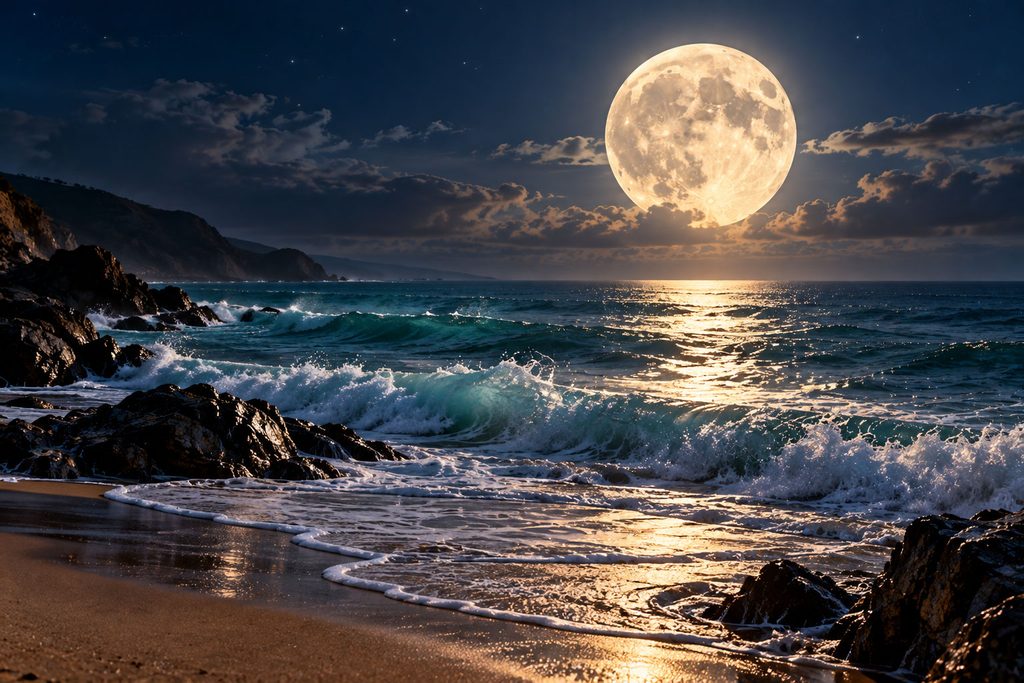
When someone tells me astrology is a load of hogwash, I sometimes approach the conversation from a different direction.
I ask whether they accept that the Moon influences the Earth’s oceans. Naturally, they do. The relationship between the Moon’s gravitational influence and ocean tides is established science. Then I ask if they’ve ever spoken to a police officer, firefighter, hospital worker, doctor, taxi driver, publican or someone working on a crisis helpline about changes they see in people during a Full Moon.
It’s remarkable how many people working in demanding, public-facing professions will confirm they experience unusually eventful and tense episodes when the Moon is full. Of course, there’s an important distinction between personal experience and scientific evidence.
Research hasn’t consistently demonstrated that Full Moons cause increases in crime, psychiatric emergencies or unusual human behavior. And although the human body contains a considerable amount of water, that doesn’t mean the Moon creates ocean-like tidal effects within us.
The science deserves to be represented accurately.
But my purpose in raising the subject isn’t to declare that the Moon’s influence on the oceans proves astrology. It’s to encourage a conversation.
After all, there’s a considerable difference between saying, “I don’t believe astrology works,” and saying, “I don’t believe astrology works, and therefore there’s nothing about it worth understanding.”
The first is a reasonable position. The second closes the door before the discussion has even begun.
Why People Read Horoscopes as a Daily Ritual
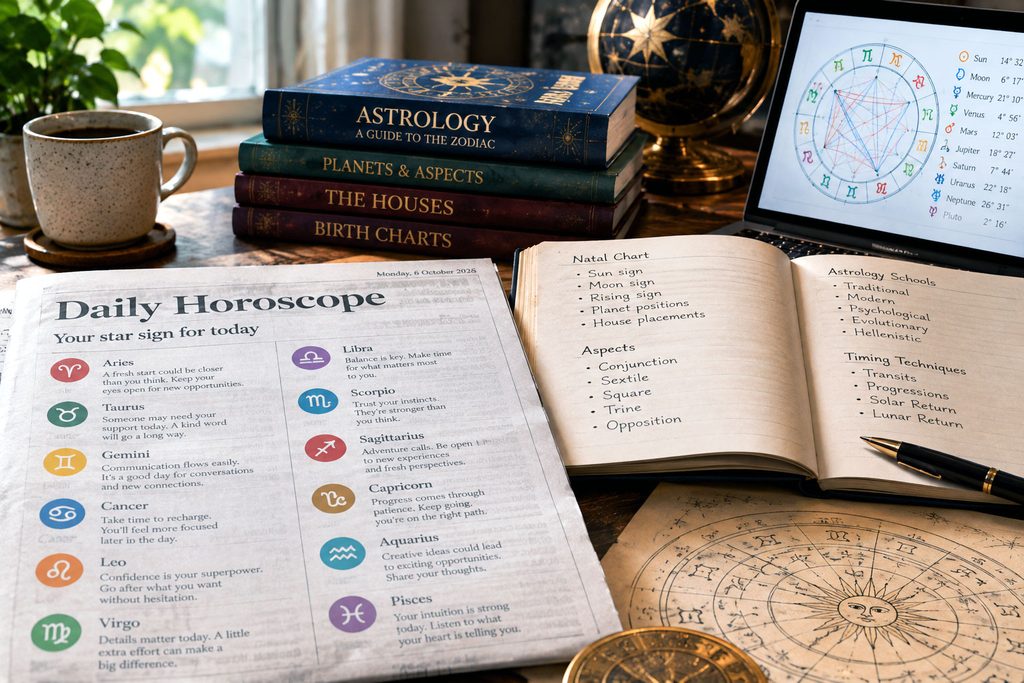
Another explanation for astrology’s enduring appeal is surprisingly ordinary.
People like routines. Some begin their mornings with coffee and the news. Others check the weather, sports results or social media before they’ve properly woken up.
For millions of people, reading a horoscope has become part of that routine. It offers a moment of reflection in a world that rarely slows down. There’s something reassuring about the suggestion that tomorrow might bring a fresh opportunity, that today’s difficulties could be temporary or a relationship might improve.
That reassurance doesn’t necessarily depend on belief. A person can enjoy an encouraging horoscope without imagining the planets have personally arranged a successful Tuesday.
There’s also an element of entertainment. Some people read their partner’s horoscope, compare predictions with friends or laugh when a forecast seems spectacularly inappropriate.
Astrology can be a social experience as much as a personal one.
Astrology Is Much More Than Twelve Daily Predictions
Here’s where I think the conversation becomes particularly interesting.
For many people, astrology begins and ends with the twelve zodiac signs appearing in newspapers, magazines and websites.
They assume that’s astrology. But daily Sun-sign horoscopes represent only a small, relatively modern part of a much older and more complicated tradition.
A personal birth chart, for example, considers the positions of the Sun, Moon and planets at the time and place of someone’s birth. Astrologers may also examine planetary relationships, astrological houses and various timing techniques.
Different schools of astrology approach these factors differently, and astrologers themselves don’t always agree about their interpretation.
None of that establishes astrology as a scientifically validated method of predicting personality or future events.
But it does demonstrate that the subject is considerably more involved than a few entertaining sentences beneath the heading Gemini.
Someone who dismisses astrology after reading an unconvincing newspaper horoscope may be judging an entire tradition by its most simplified popular expression.
That’s rather like deciding you understand music because you’ve heard a mobile phone ringtone.
Maybe We Enjoy Not Knowing Everything
We live in an age when information is available almost instantly.
We can check tomorrow’s weather, follow aircraft across the planet, calculate astronomical positions centuries into the future and ask artificial intelligence to explain practically anything. Yet uncertainty remains an unavoidable part of being human.
We still wonder whether relationships will last, whether opportunities will appear and whether decisions we’re contemplating will turn out well.
Horoscopes speak to that uncertainty. Not everyone approaches them with unquestioning faith. Some readers are skeptical, some are hopeful and others simply enjoy the possibility that life might have a pattern they haven’t yet recognized.
And perhaps that explains why people read horoscopes even when they don’t believe in astrology. We don’t always read something because we’re convinced it’s true.
Sometimes we read because we’re curious. Sometimes because it makes us smile. Sometimes because it encourages us to consider a different possibility.
And occasionally, because something we weren’t expecting gives us a reason to think.
So, the next time someone insists astrology is complete nonsense, I might ask a simple question:
When did you last read your horoscope?
Their answer could be rather interesting.
Thank you for reading.
Jeff Prince
Astrologer & Development Manager, Horoscope Services

About the author
Jeff Prince has spent more than 25 years helping to develop astrology software, horoscope APIs, white-label astrology platforms and globally syndicated horoscope content.
Through his Prinsights blog, he continues to explore the synergies between astrology, artificial intelligence and technology.
Enjoy Prinsights? Add Horoscope Services as a Preferred Source on Google.